
The Book of Kells A
“I mbrat an bhrollaigh ghil-se
ní bhiadh an dealg droighin-se”
from ancient Celtic poem
“In a cloak, that bright breast of yours—it should not be the blackthorn brooch”
English Translation
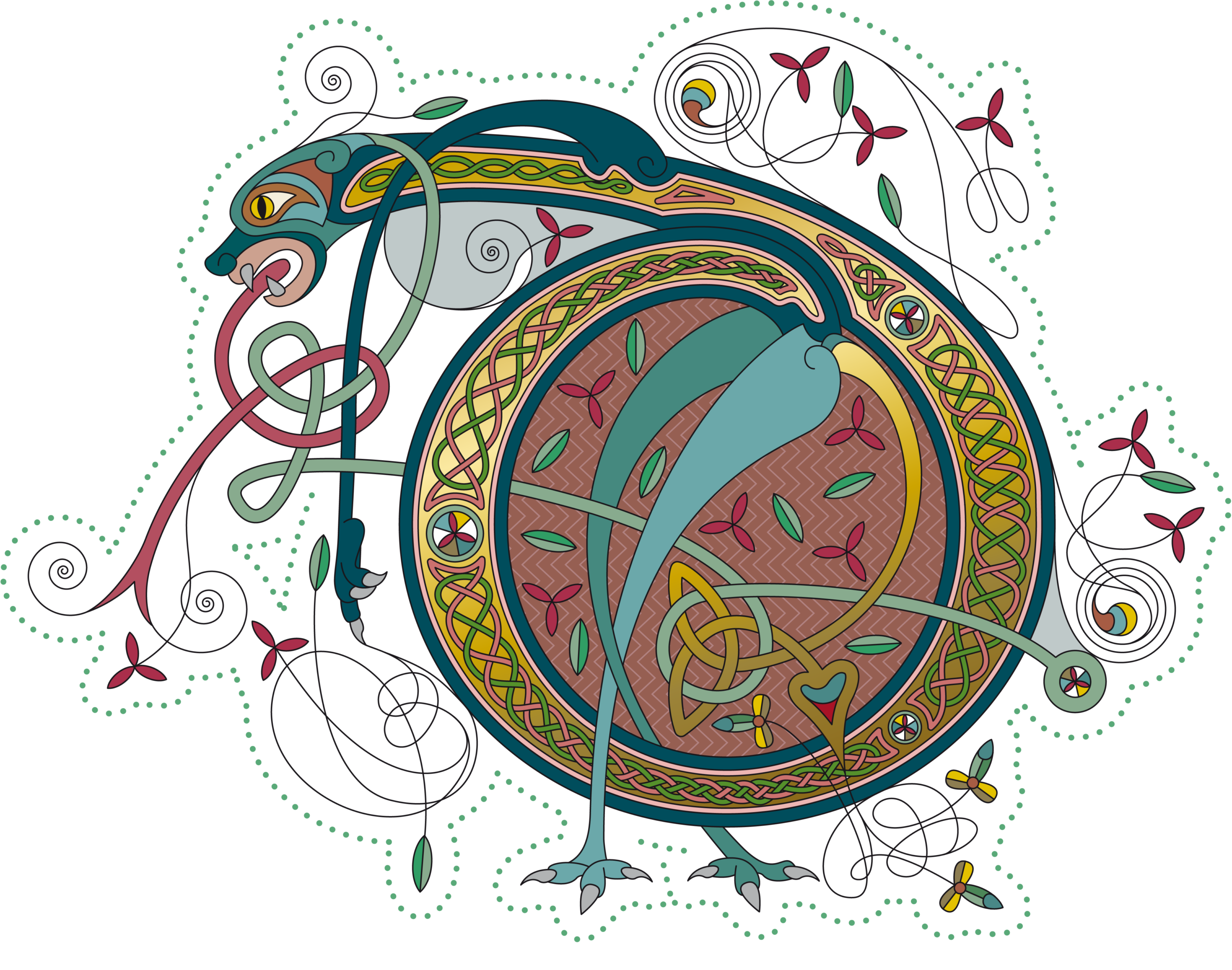 he Book of Kells is a masterwork of Insular illumination, created around 800 AD by Celtic monks, likely starting on the island of Iona off the coast of Scotland before being moved to Kells, Ireland, to escape Viking raids. Written in Latin, this illuminated manuscript contains the four Gospels of the New Testament, celebrated worldwide for its breathtakingly intricate artwork. Every page is adorned with vibrant pigments, elaborate knotwork, mythical beasts, human figures, and delicate spiral patterns interwoven into the calligraphy itself—most famously on the iconic Chi Rho page, which marks the opening of the Gospel of Matthew. Today, preserved at Trinity College Dublin, it stands as Ireland’s finest national treasure and one of the supreme achievements of medieval Christian art.
An Ancient Celtic Poem and English Translation
|
Ancient Celtic Poetry I mbrat an bhrollaigh ghil-se |
Ancient Celtic Poetry In a cloak, that bright breast of yours– |
Ancient Celtic Symbols
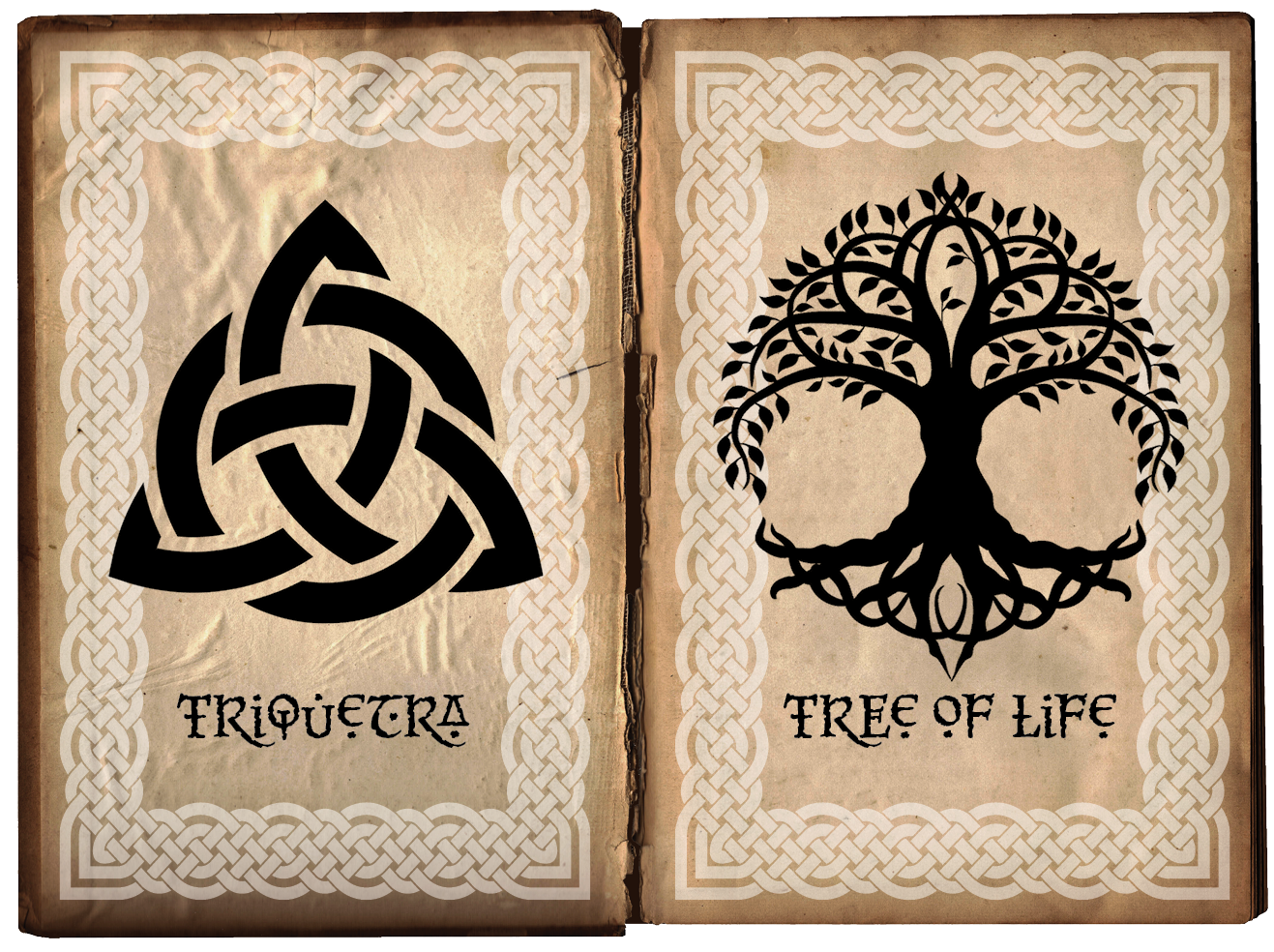
The Celtic triquetra, or Trinity Knot, is an ancient three-pointed symbol formed by a continuous, overlapping arc that represents interconnectedness, eternal life, and threefold concepts such as mind, body, and spirit or the Holy Trinity. There are several variations on the design of this symbol, but they all seem to have the same core meaning, that of a woman/goddess.
What we see as branches are akin to a person reaching for the heavens, and that is what the tree stands for. As ancient living things, trees (and forests) played an important part in the lives of the Celts. While their roots remain firmly planted in the earth, the tree’s branches reach upward toward spirits and those who came before us.

Above: A modern interpretation of an ancient Celtic stencil by Co Spinhoven