
The Book of Kells Start Page
“Hoc est enim corpus meum quod confringitur pro saeculi uita”
from the book of Kells
“For this is my Body, which is broken into pieces for the life of the world”
found on folio 113v
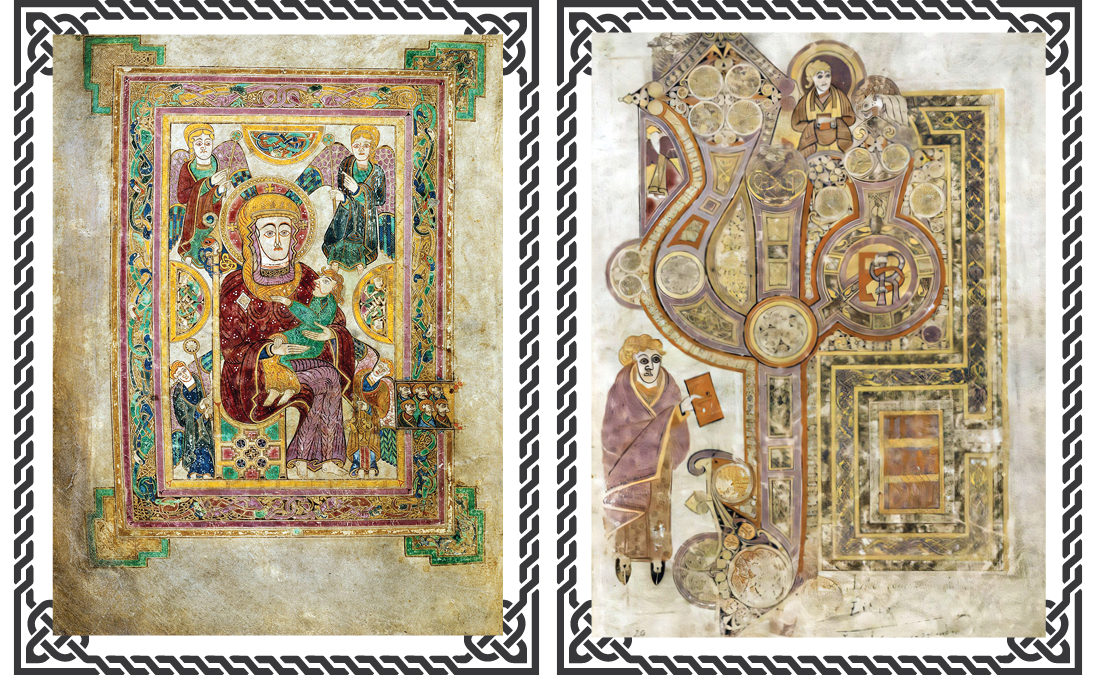
 he Book of Kells is a masterwork of Insular illumination, created around 800 AD by Celtic monks, likely starting on the island of Iona off the coast of Scotland before being moved to Kells, Ireland, to escape Viking raids. Written in Latin, this illuminated manuscript contains the four Gospels of the New Testament, celebrated worldwide for its breathtakingly intricate artwork. Every page is adorned with vibrant pigments, elaborate knotwork, mythical beasts, human figures, and delicate spiral patterns interwoven into the calligraphy itself—most famously on the iconic Chi Rho page, which marks the opening of the Gospel of Matthew. Today, preserved at Trinity College Dublin, it stands as Ireland’s finest national treasure and one of the supreme achievements of medieval Christian art.
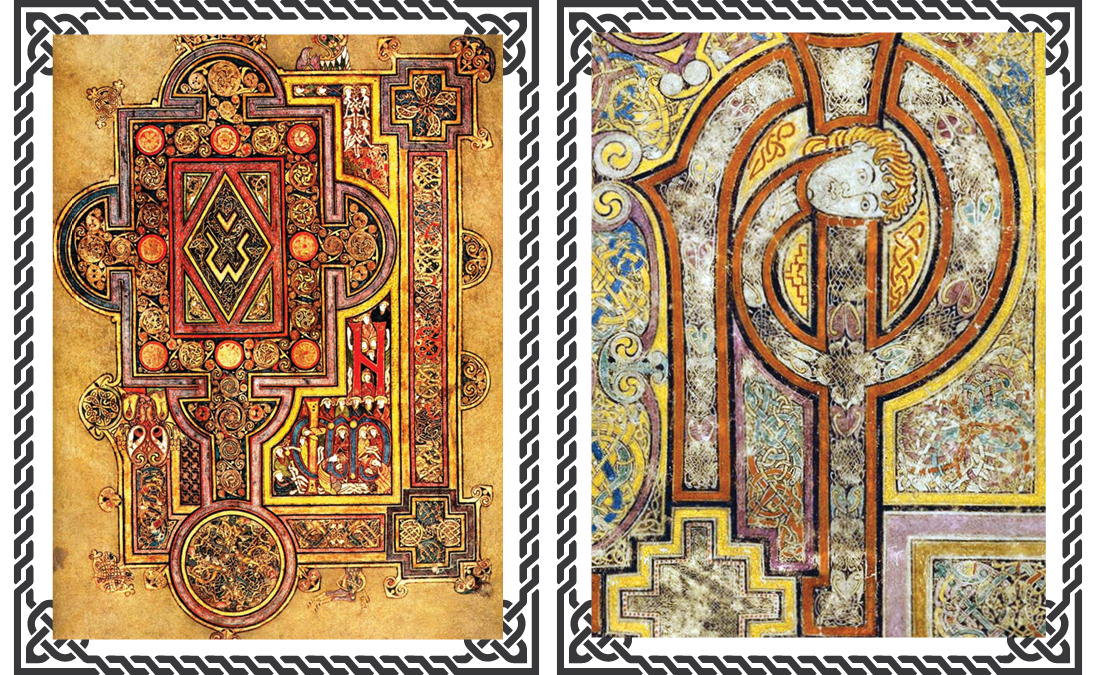
The Chi Ro Page
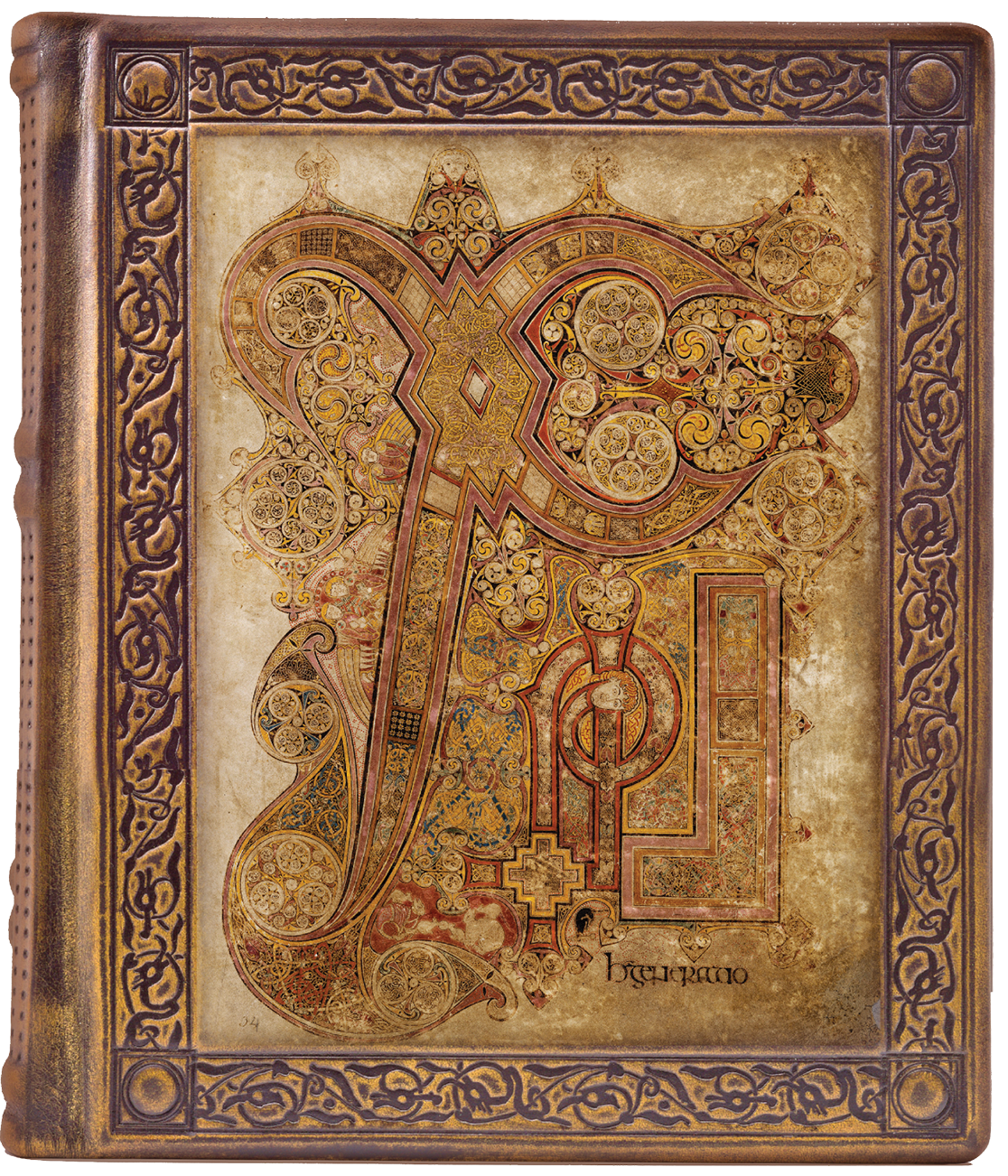
he Chi Rho page (folio 34r—above) of the Book of Kells—crafted by Celtic monks around AD 800—is a crowning achievement of Insular manuscript illumination, turning the opening of Matthew 1:18 (“Christi autem generatio…”) into an astounding visual spectacle. The sacred Greek abbreviation for Christ—Chi (X), Rho (P), and Iota (I)—dominates the composition, transforming written text into a dense, monumental maze of swirling interlace, fine spirals, and intricate trumpet patterns. Look closely within the dizzying geometric precision, and you can spot delicate details hidden directly among the knotwork, including angels, moths, an otter catching a fish, and cats watching mice nibble on a sacred host. By blending ancient Celtic decorative traditions with deep Christian theology and playful natural observation, this famous page stands as a masterpiece of medieval artistic devotion.

“XPI [Christi] autem generatio”
from the book of Kells
“Now the birth of Christ was on this wise…”
English Translation
“Do-rochoid Cellachán mac Cú Choiccríche gort m-becc fo a thír for Sanct Niamh-Colum Cille Agus for Muire…”
from the book of Kells
“Cellachán son of Cú Choiccríche gave a small field out of his land to Saint holy Columba and to Mary forever…”
English Translation
“Initium evangelii Iesu Christi Filii Dei sicut scriptum est in Isaia propheta…”
from the book of Kells
“The beginning of the gospel of Jesus Christ, the Son of God; as it is written in Isaiah the prophet…”
English Translation
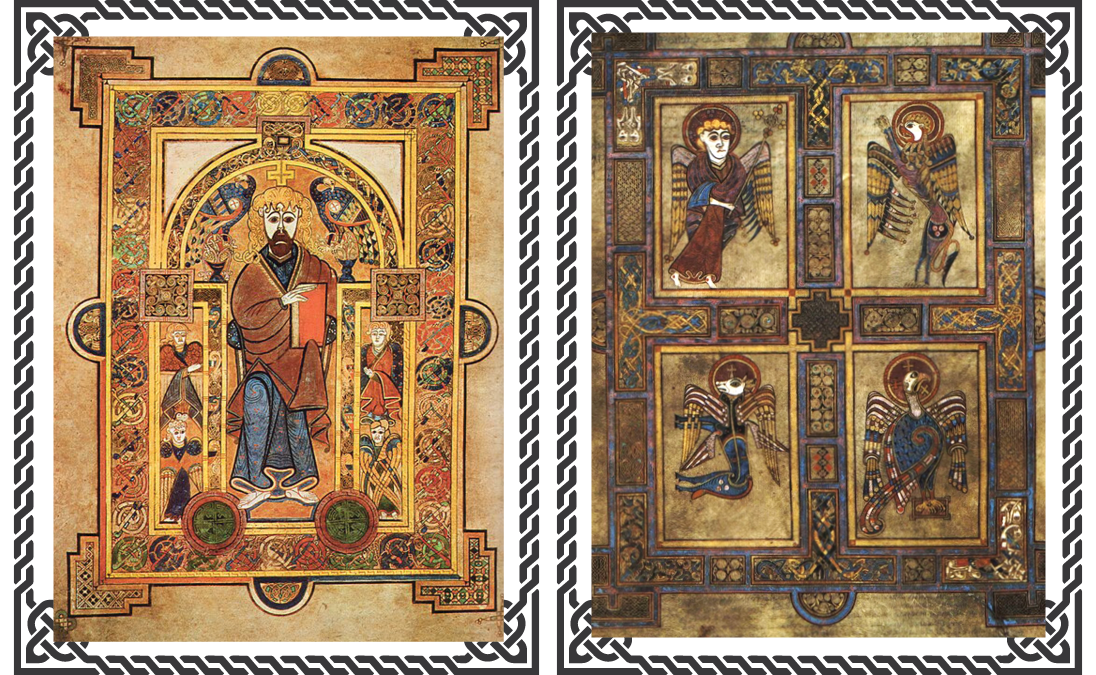
“Haec equidem si acutius intenderis… tam delicatas et subtiles, tam arctas et compressas, tam intricatas et ligatas… notare poteris…”
from the book of Kells
“If you look closely at it… you will see intricacies so delicate and subtle, so concise and full of knots… that you might state that all this was the work of an angel, and not of a man.”
English Translation
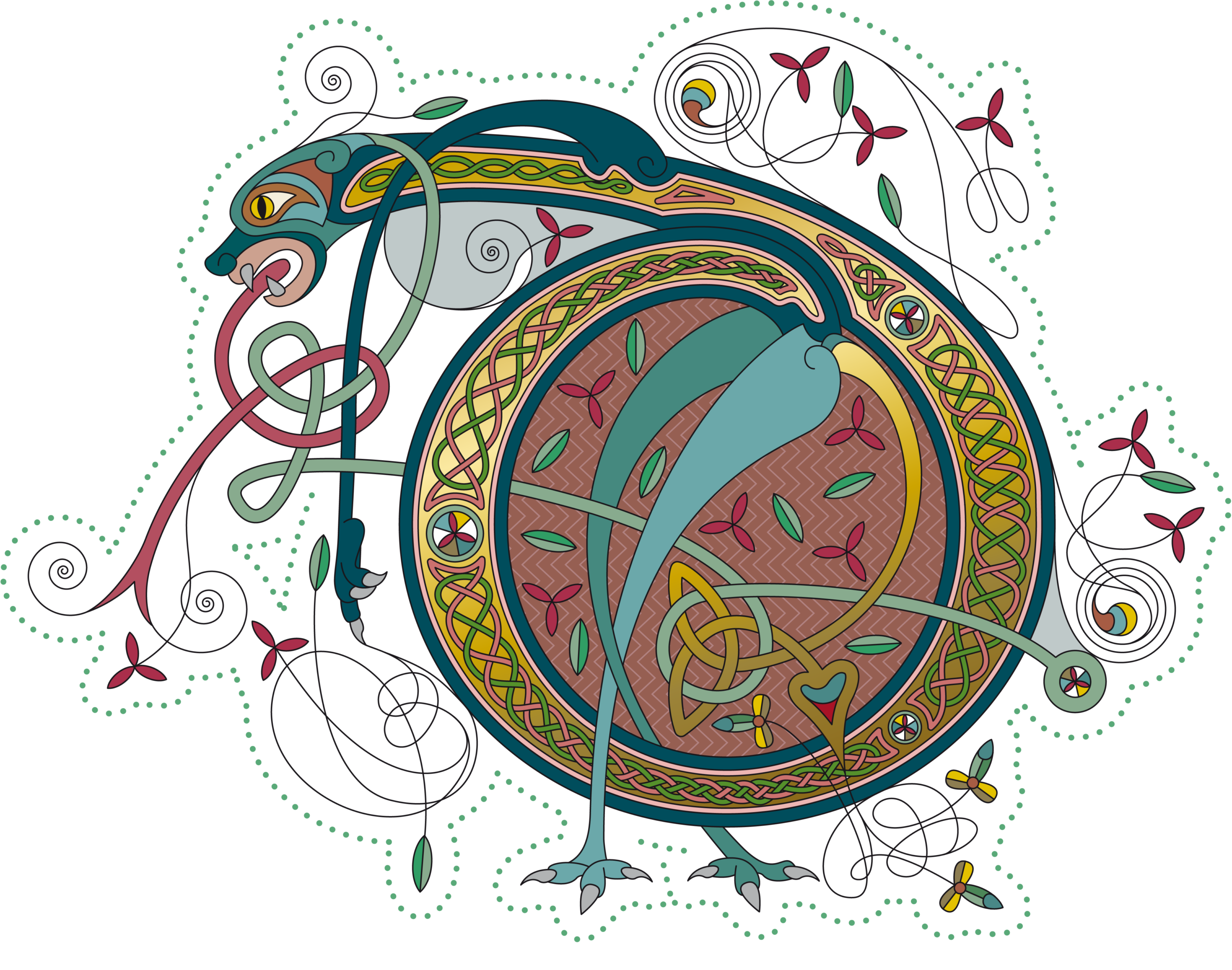
Above: A modern interpretation of an ancient Celtic stencil by Co Spinhoven