Egypt: Archeology, Egyptologists, Hieroglyphics and Gods: Part 3






Part three of six
“Protection According to the Myth of the Cobra…”
 Atum: Original Creator Deity
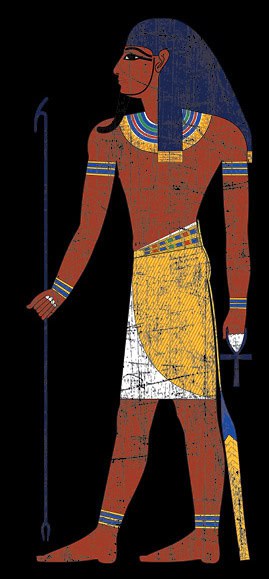
In ancient Egyptian mythology, Atum (also known as Atem or Tem) is revered as the original creator deity and the first god of the Heliopolitan Ennead. Emerging from the primeval, chaotic waters of Nun on the primordial mound (Benben), Atum was self-created—a deity who contained both male and female principles within himself. Through an act of self-generation (often depicted as coughing, spitting, or masturbating), he brought forth the first divine couple: Shu, the god of air, and Tefnut, the goddess of moisture, thereby initiating the creation of the cosmos. As a solar deity, Atum specifically represents the setting sun or the sun at the end of its daily journey, completing the solar cycle opposite Ra (the noon sun) and Khepri ( the morning sun). Often depicted as a crowned king wearing the Double Crown of Upper and Lower Egypt (Pschent) or as a man leaning on a staff, Atum was fundamentally linked to royal authority, serving as the divine protector of the Pharaoh and symbolizing both the ultimate origin and the eventual end of the universe to which all creation would one day return.
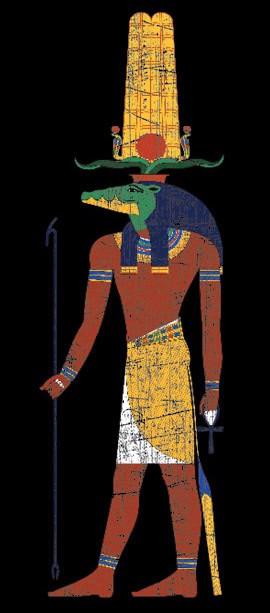 Sobek: Crocodile God
In ancient Egyptian mythology, Sobek (also rendered as Suchos) is the formidable crocodile god associated with pharaonic power, military prowess, fertility, and the life-giving forces of the Nile. Primarily worshipped in regions with large crocodile populations, such as the Faiyum oasis and Kom Ombo, Sobek was revered as a fierce deity who protected the Egyptian people from the real and symbolic dangers of the river. According to Egyptian creation beliefs, the Nile was said to have flowed directly from Sobek’s sweat, linking him closely to agricultural abundance and the fertile silt left by the river’s annual flooding. Often depicted as a mummified crocodile or as a man with the head of a crocodile crowned with a sun disk and tall plumes, he was eventually merged with the sun god to become Sobek-Ra, emphasizing his cosmic authority. Beyond his aggressive strength, Sobek served as a powerful guardian of the Pharaoh, bestowing physical strength and protection against evil forces both in life and in the passage through the Duat (underworld).
Ancient Egyptian Symbols
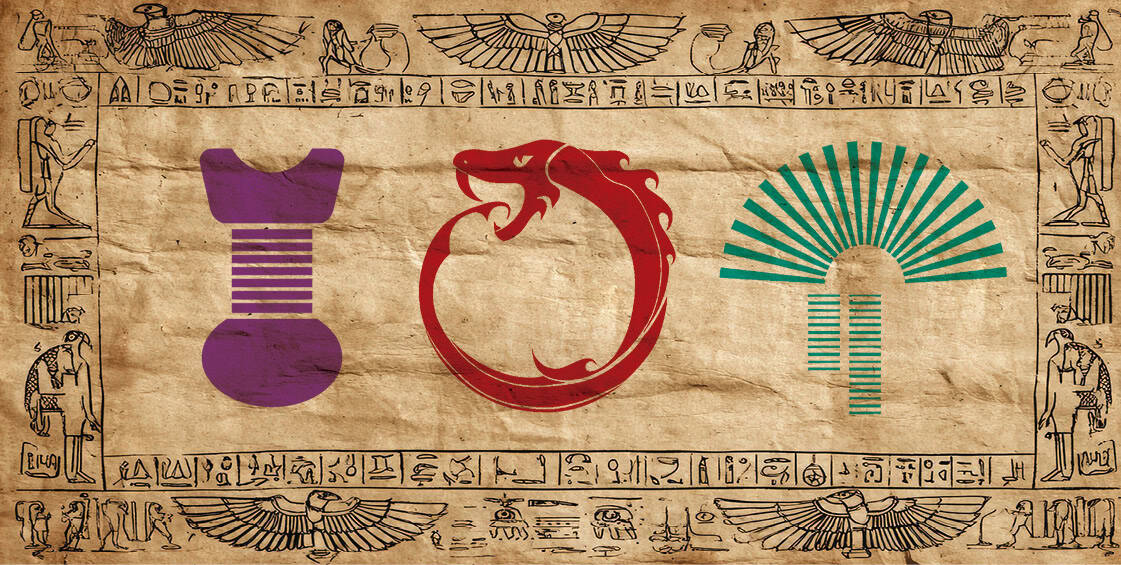
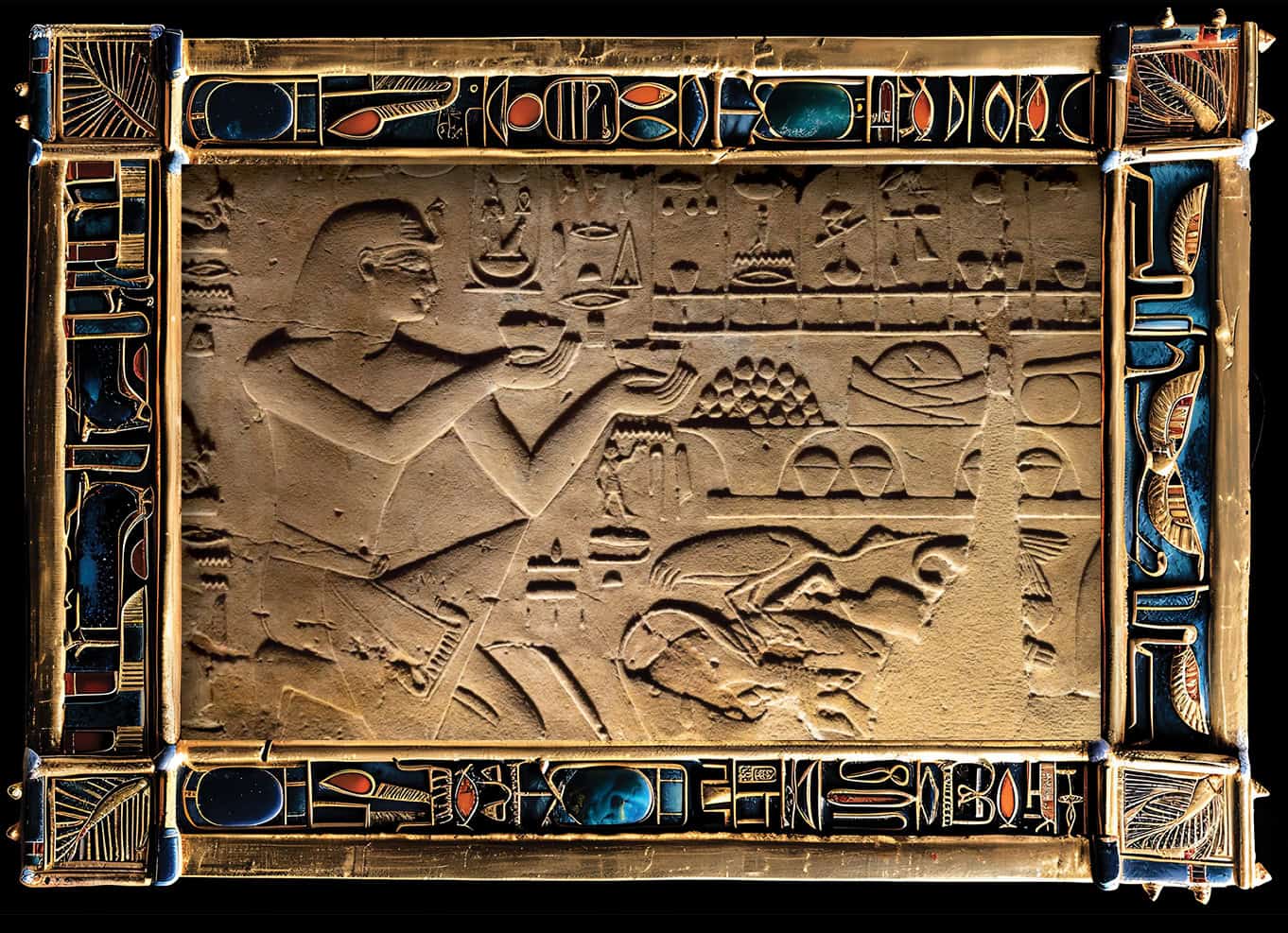
Above: In early Egyptian art and proto-hieroglyphic writing—particularly during the Naqada II–III periods and the First Dynasty (c. 3500–2900 BCE)—human and animal figures served as fundamental visual symbols long before formal script fully developed. Carved into cosmetic palettes, ivory tags, and tomb ceremonial objects, animal motifs such as falcons, bulls, scorpions, and lions represented divine authority, cosmic order (maat), and raw martial power, frequently personifying the ruler’s strength. Simultaneously, human forms were depicted using rigid, standardized conventions—such as the composite profile view—to convey rank, action, and statecraft. As these images coalesced into formal hieroglyphs, animal ideograms retained their literal identity while also functioning phonetically, and human figures were categorized into determinatives indicating social roles, gestures, and abstract concepts like worship, power, or supplication.
Famous Egyptologists
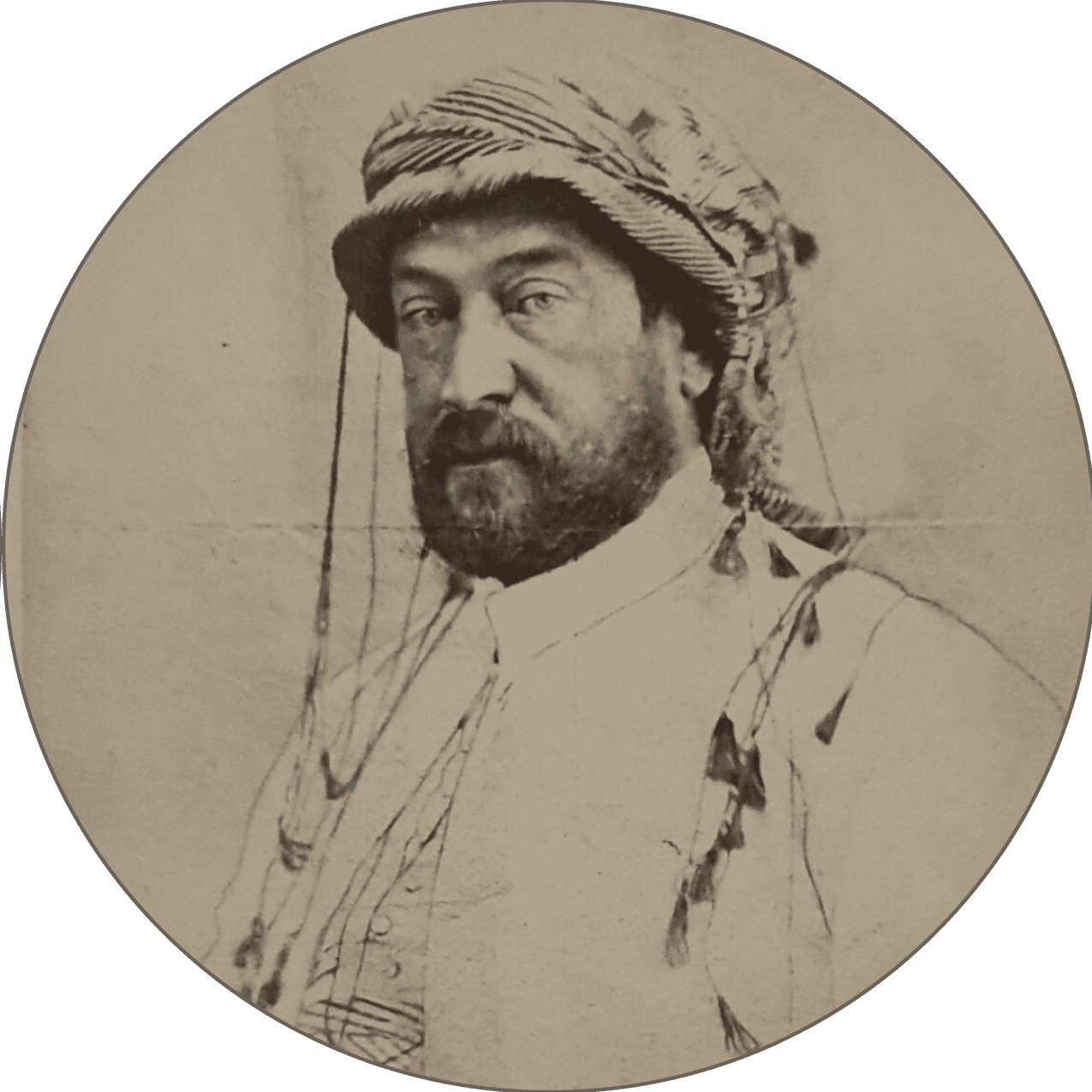 In the study of ancient Egypt, Auguste Mariette (1821–1881; often styled as Mariette Pasha or Mariette Bey) stands as one of the most pivotal figures in the foundation of modern Egyptology. Sent to Egypt in 1850 by the Louvre to purchase ancient Coptic manuscripts, Mariette instead ventured into field archaeology, discovering the legendary Serapeum at Saqqara—the subterranean burial complex of the sacred Apis bulls. Recognizing the rampant looting and illicit trade of antiquities, Mariette dedicated his life to protecting Egypt’s heritage, establishing the Egyptian Antiquities Service(Service des Antiquités de l’Égypte) to regulate archaeological excavations and safeguard historic sites across the country.He went on to found the Bulaq Museum in Cairo—the direct precursor to the famous Egyptian Museum in Tahrir Square—ensuring that artifacts remained in Egypt rather than being exported abroad. Beyond his extensive excavations at Memphis, Karnak, Edfu, and Abydos, Mariette also conceived the original scenario for Giuseppe Verdi’s celebrated, Egypt-themed opera Aida. Today, he is remembered not only as a master excavator who uncovered thousands of statues and tombs, but as the pioneer who transformed Egyptian archaeology from treasure hunting into a regulated, national science.
Learn more about ancient egypt