Egypt: Archeology, Egyptologists, Hieroglyphics and Gods: Part 2






Part two of six
“A circle of rope that has no beginning and no end.”
 Anubis: Protector of the Dead
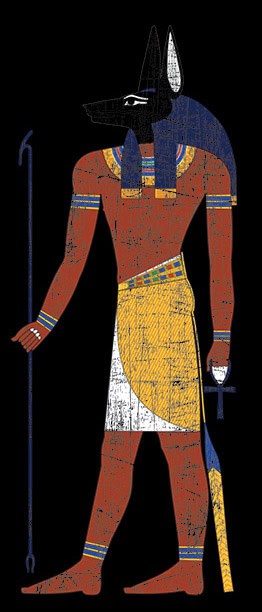
Anubis, the jackal-headed deity of ancient Egyptian mythology, stands as the solemn protector of the dead and the supreme master of the mummification process. Originally recognized as the primary lord of the underworld before the rise of Osiris, Anubis guided departed souls through the perilous transition from the mortal realm to the afterlife. Associated with the color black—which symbolized both the discoloration of embalmed corpses and the fertile black soil of the Nile delta representing rebirth—he oversaw the vital “Weighing of the Heart” ceremony (Psychostasia). In this judgment, Anubis measured a deceased person’s heart against the feather of Ma’at (truth and justice) to determine their worthiness to enter eternal paradise. As Inpu, watcher from the sacred tombs and guardian of necropolises, his vigilant presence ensured that bodies were properly preserved, rituals were accurately conducted, and tombs remained protected from evil forces and desecration.
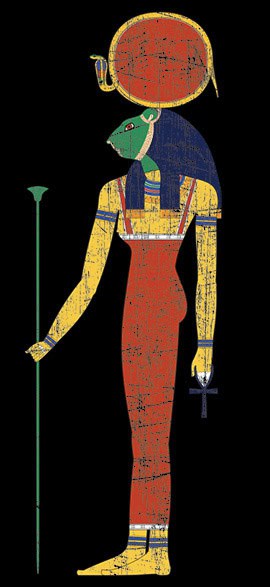 Sehkmet: Lion-Headed Goddess
Sekhmet, the lioness-headed goddess of ancient Egyptian mythology, embodies the scorching heat of the sun, the destructive power of divine vengeance, and the fierce instinct of protection. Born from the fiery eye of Ra to punish humanity for its disobedience, her name translates to “The Powerful One,” reflecting her terrifying role as a deity of war, conquest, and unstoppable rage. Yet, alongside her capacity for devastation, Sekhmet held a dual nature as a supreme patron of healing and medicine. Ancient Egyptian physicians, often serving as her priests, invoked her name to ward off epidemics and cleanse sickness, believing that the goddess who could unleash lethal plagues also possessed the ultimate power to cure them. As a fierce defender of order (Ma’at) and guardian of Pharaohs, her fierce gaze and sun-disk crown stood as an enduring symbol of solar energy harnessed in service of cosmic balance.
Ancient Egyptian Symbols
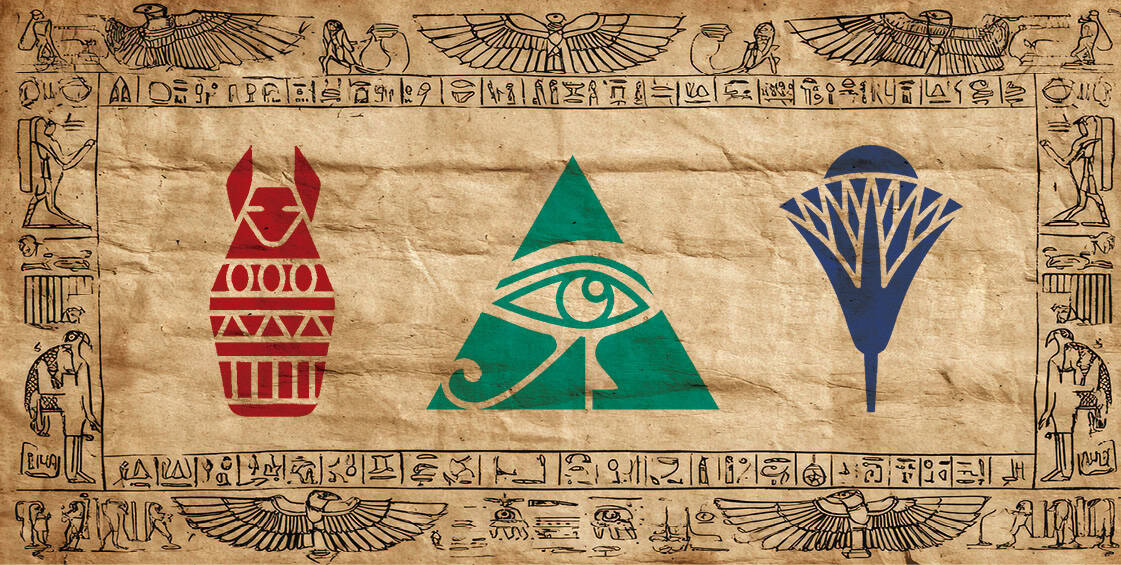
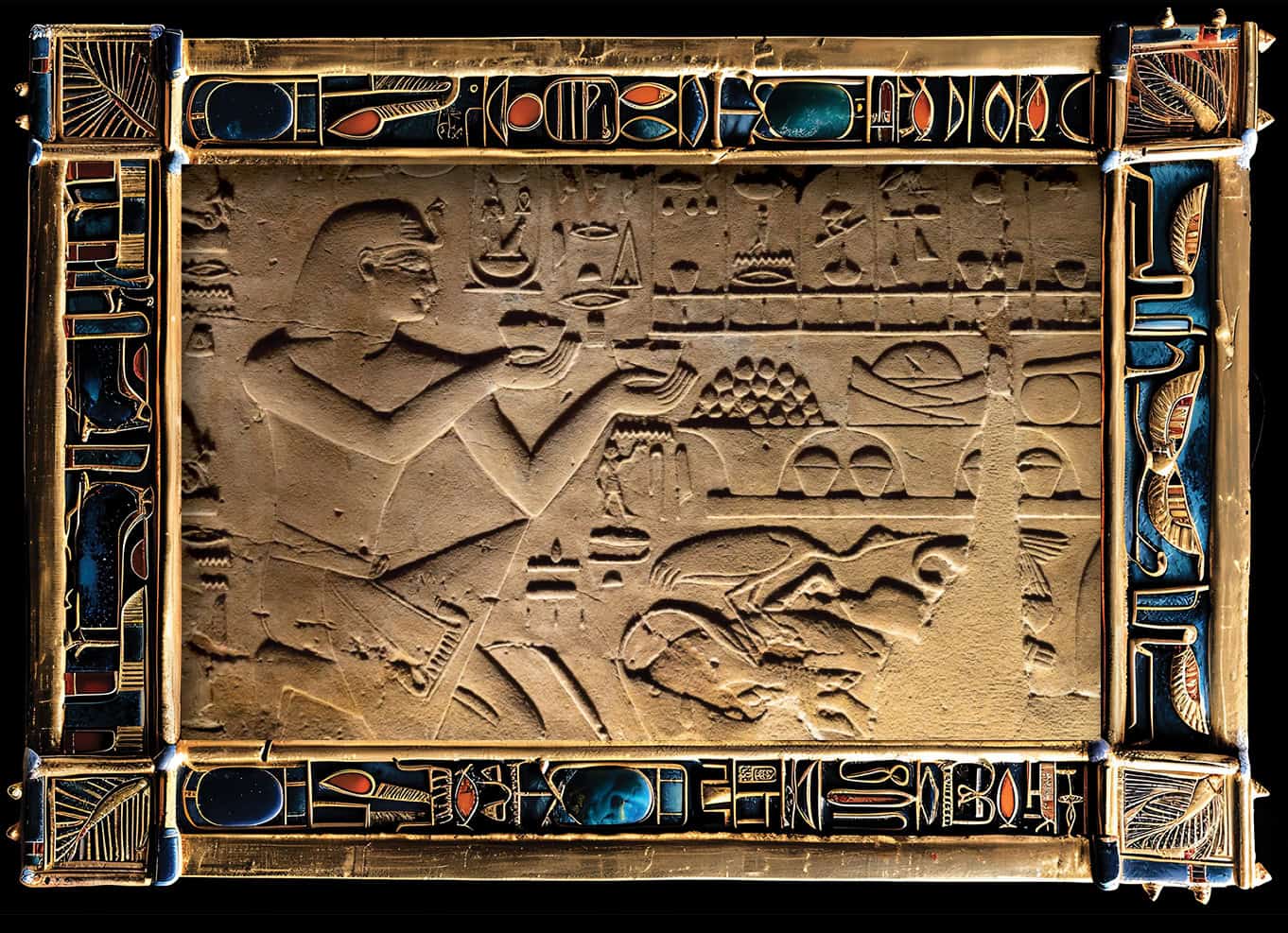
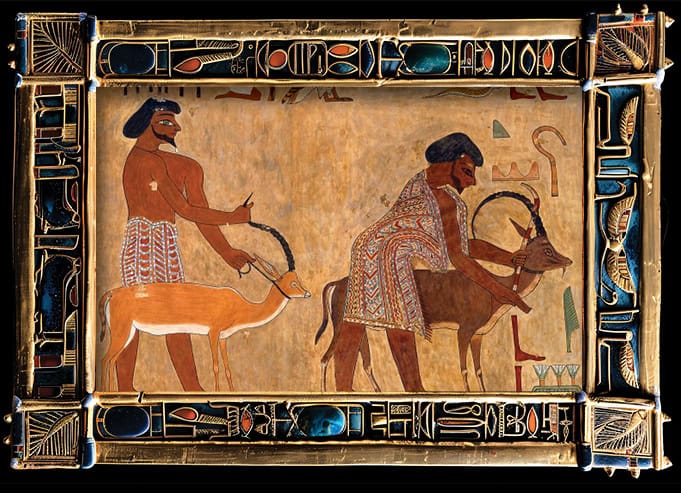
Above: In early Egyptian art and proto-hieroglyphic writing—particularly during the Naqada II–III periods and the First Dynasty (c. 3500–2900 BCE)—human and animal figures served as fundamental visual symbols long before formal script fully developed. Carved into cosmetic palettes, ivory tags, and tomb ceremonial objects, animal motifs such as falcons, bulls, scorpions, and lions represented divine authority, cosmic order (maat), and raw martial power, frequently personifying the ruler’s strength. Simultaneously, human forms were depicted using rigid, standardized conventions—such as the composite profile view—to convey rank, action, and statecraft. As these images coalesced into formal hieroglyphs, animal ideograms retained their literal identity while also functioning phonetically, and human figures were categorized into determinatives indicating social roles, gestures, and abstract concepts like worship, power, or supplication.
Famous Egyptologists
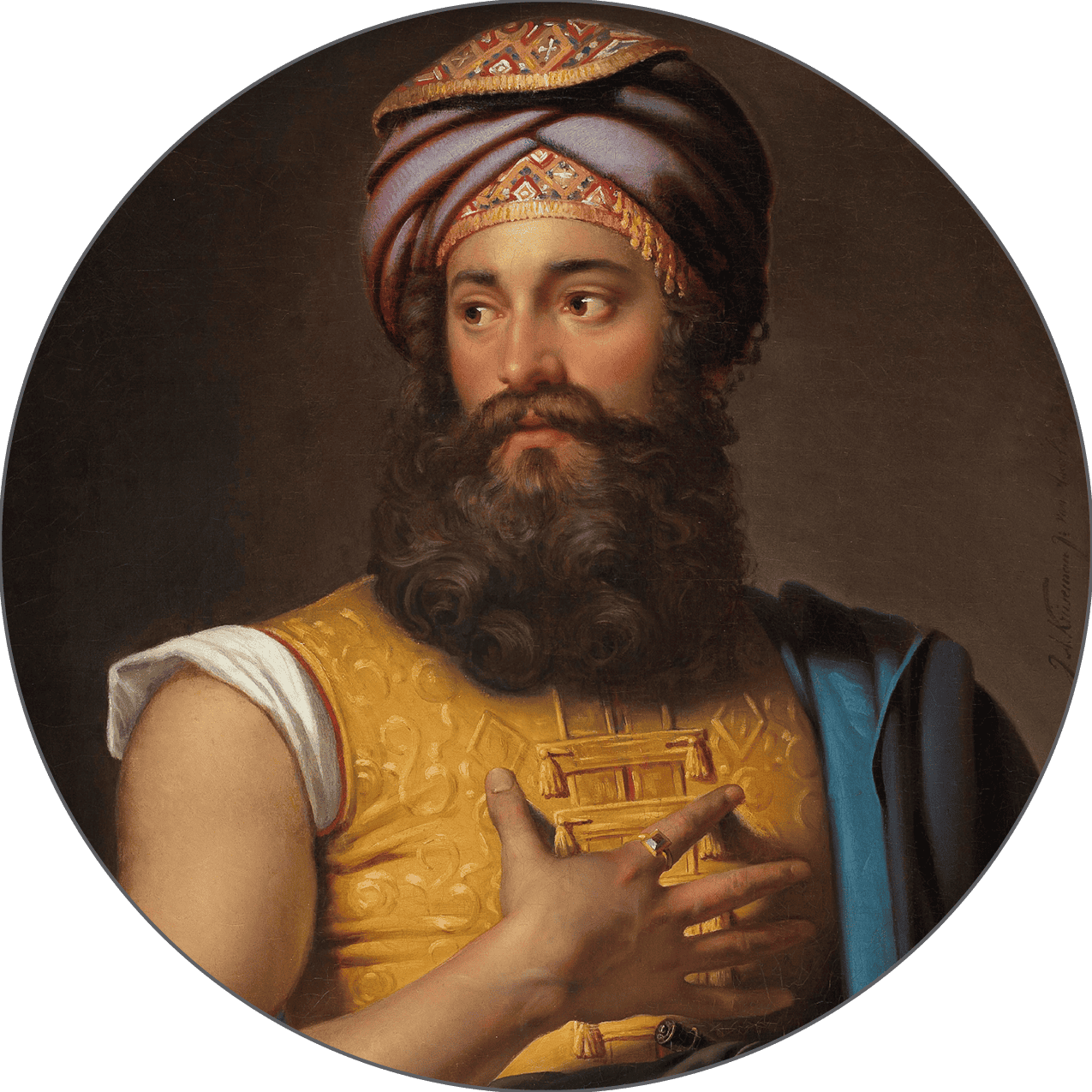 Giovanni Battista Belzoni (1778–1823), an Italian explorer, pioneer antiquarian, and former circus strongman, remains one of the most colorful and prolific figures in early 19th-century Egyptology. Standing nearly seven feet tall, Belzoni combined impressive physical strength with engineering ingenuity to accomplish monumental feats of excavation and transport along the Nile. Commissioned initially to move the massive 7-ton granite bust of Ramesses II—dubbed the “Young Memnon”—from Thebes to the Nile for shipment to the British Museum, he succeeded where others had failed. His energetic expeditions led to groundbreaking discoveries, most notably the magnificent tomb of Pharaoh Seti I in the Valley of the Kings (often called “Belzoni’s Tomb”), the opening of the Great Temple of Ramesses II at Abu Simbel, and the discovery of the entrance to the Pyramid of Khafre at Giza. Though criticized by modern standards for the heavy-handed, treasure-seeking methods typical of his era, Belzoni’s meticulous watercolors, casts, and published memoirs brought the breathtaking scale of ancient Egypt to the fascinated public of Western Europe.
Learn more about ancient egypt